PART 4: The DSM - When the Diagnosis Becomes the Story
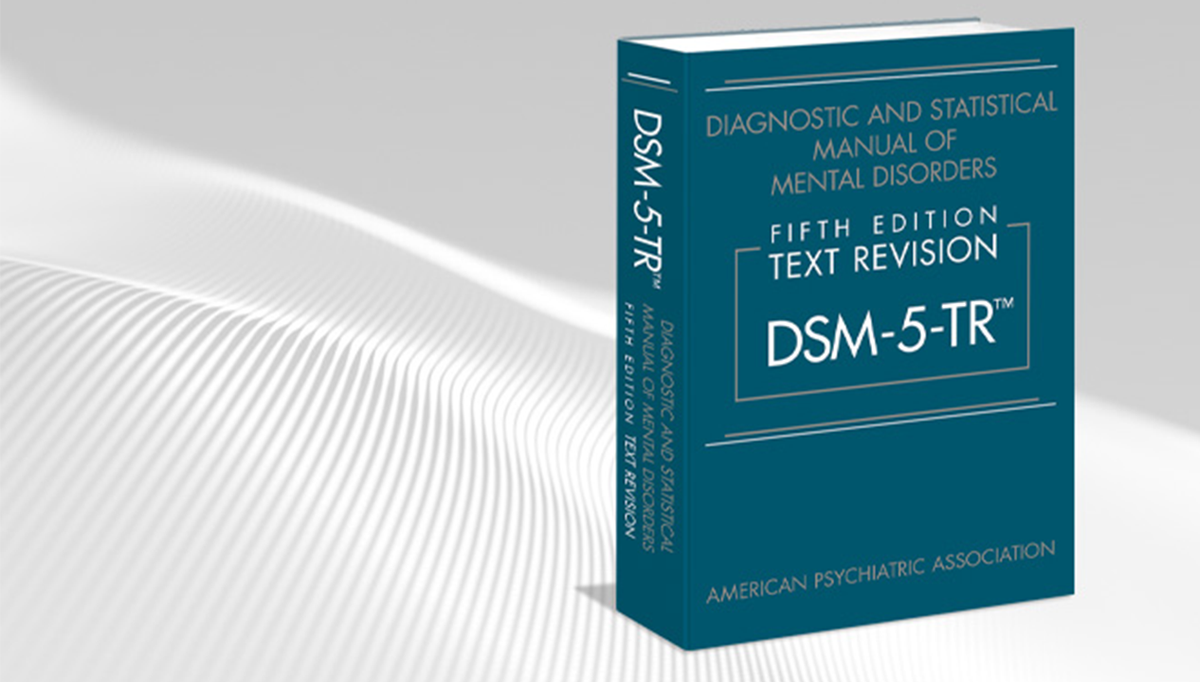
This essay is Part 4 of the DSM series. Part 3 asked what the DSM actually does; here I ask what clinicians could do instead — and why training rarely teaches it.
How diagnostic categories can shape what we understand about distress, difference, and ourselves
By this point in the series, we've established that the DSM is not simply a neutral catalog of mental illness. We've looked at how its authority developed, how DSM-III transformed psychiatric classification, and how diagnostic categories became deeply embedded in clinical and administrative systems.
We've also looked at an important distinction: A diagnosis can describe a pattern without explaining why that pattern exists.
But there is another question I think deserves more attention: What happens when the diagnosis stops being a description and starts becoming the story?
Because this is where diagnosis can become much more powerful than a billing code. A diagnosis can begin as a shorthand for a collection of experiences. Over time, however, that shorthand can start to feel like an explanation of the person themselves.
And once that happens, it can change what we notice, what we ask, what we expect, and even what a person believes about themselves.
When a Description Starts to Feel Like an Explanation
Imagine someone says:
"I have anxiety."
That statement might simply be useful shorthand.
But listen to how easily it can become something else:
"I can't do that because I have anxiety."
Or:
"I'm just an anxious person."
Or:
"That's my anxiety talking."
The diagnosis—or even the symptom label—has shifted from describing an experience to explaining behavior. This is one version of what sociologists have called reification: treating an abstract classification as though it were a concrete thing that exists independently in the world (Kirk & Kutchins, 1992).
The distinction matters because explanations shape what we do next. If anxiety is treated as a thing inside the person, the obvious intervention is to change the person. If anxiety is understood as a response occurring within a particular history, relationship, environment, and set of circumstances, we have many more questions to ask.
What is the person afraid will happen? When does the anxiety appear? What has taught them that this situation is dangerous? What happens when they avoid it? What does avoidance protect them from? What conditions make the anxiety better or worse?
The label doesn't answer those questions.
We still have to ask them.
The Same Behavior Can Tell Very Different Stories
This is one of the reasons I find formulation so important. Consider withdrawal. A person who stays home, cancels plans, and spends very little time with other people might be experiencing depression.
They might also be:
- recovering from burnout
- protecting themselves after repeated social rejection
- experiencing sensory overload
- grieving
- dealing with chronic illness
- living in an unsafe environment
- conserving limited energy
- overwhelmed by executive-function demands
- or simply someone who prefers a small social world.
The behavior doesn't tell us which story is true. And even when a diagnosis accurately describes the pattern, it still doesn't tell us what that pattern means for this particular person.
This is why process-based approaches have increasingly emphasized identifying psychological processes that cut across traditional diagnostic categories rather than assuming that a diagnostic label itself identifies the appropriate treatment target (Hofmann & Hayes, 2019).
The clinical question becomes:
What is happening here?
rather than simply:
What disorder is this?
Those questions can lead us somewhere very different.
"What's Wrong?" Is Not the Only Question
One of the most consequential habits in mental health care is the tendency to begin with the problem.
What's wrong?
What's dysfunctional?
What's impaired?
What's abnormal?
Those questions can be useful. But they are not the only questions available to us.
Trauma-informed approaches have long emphasized the importance of understanding how people's responses can emerge from experiences of threat, loss, violence, and disrupted safety (Herman, 1992). The Power Threat Meaning Framework takes this further by explicitly asking about experiences of power and threat, the meanings people make of those experiences, and the ways people have responded to them (Johnstone & Boyle, 2018).
That creates a different starting point:
What happened?
And then:
What did you have to do to survive it?
That question does not romanticize every coping strategy. It doesn't mean every behavior is healthy or harmless. It means that a behavior can be understandable without being sustainable. Hypervigilance might have been protective once. People-pleasing might have helped someone stay safe in a volatile relationship. Emotional suppression might have been adaptive in a family where vulnerability was punished. Masking might have helped a neurodivergent person navigate environments that did not accommodate them.
The more useful question may be: What did this strategy accomplish, and what is it costing now?
Sometimes the Environment Is Part of the Problem
Diagnostic language tends to locate the problem within the individual.
But distress does not occur in a vacuum.
People live in families, workplaces, schools, communities, economies, cultures, and political systems. Structural competency in healthcare specifically asks clinicians to recognize how social and structural conditions can shape health and become part of clinical problems rather than remaining invisible background circumstances (Metzl & Hansen, 2014).
Consider someone who is chronically anxious at work. One formulation might focus on their thoughts, coping skills, and physiological arousal.
Another might ask: Is the workplace unpredictable? Are expectations constantly changing? Is the workload unreasonable? Are they experiencing discrimination?Do they have adequate accommodations? Are they being punished for communicating differently? Are they working in conditions that are fundamentally incompatible with their needs?
These questions don't eliminate the possibility that the person could benefit from therapy. They change what therapy might need to address. Sometimes the most appropriate intervention is an internal change. Sometimes it is a relational change. Sometimes it is an environmental change.
Sometimes it is all three.
A Person Can Be "Functioning" and Still Be Struggling
I think the word functioning deserves particular scrutiny.
We use it constantly:
"high functioning" "low functioning" "impaired functioning" "return to functioning"
But functioning according to whose standard?
A person can maintain a demanding career while sleeping four hours a night. They can make every appointment, answer every email, raise children, meet deadlines, and appear remarkably competent while living in a state of chronic exhaustion. Another person may work part-time, need substantial accommodations, or structure their life around sensory and energy limitations.
Which person is functioning better?
The answer isn't obvious.
Research on psychological well-being has long distinguished well-being from simply the absence of symptoms. Ryff's model, for example, includes dimensions such as autonomy, positive relationships, environmental mastery, purpose in life, personal growth, and self-acceptance (Ryff, 1989). Keyes similarly distinguishes flourishing from simply being free of mental illness (Keyes, 2002).
This matters clinically. If our goal is simply to restore people to the level of functioning they had before treatment, we may accidentally restore them to a life that was making them miserable.
Sometimes treatment should help someone function better within their existing life.
Sometimes it should help them build a different life.
Neurodivergence Makes This Especially Visible
This question becomes particularly important when working with neurodivergent people.
A deficit-oriented framework can make it easy to interpret differences in communication, attention, sensory processing, social interaction, or executive functioning primarily as problems located inside the individual.
A neurodiversity-affirming perspective asks a different question: What happens when a person's environment is designed around a different kind of brain?
A person may struggle in a fluorescent-lit, open-plan workplace and function dramatically better in a quieter environment. Someone may be overwhelmed by rapid verbal communication but communicate beautifully through writing. Someone may struggle with unstructured social interaction but thrive when expectations are explicit. Someone may appear inconsistent because their capacity varies dramatically with sensory load, sleep, stress, or accumulated demands.
The difficulty is real. But "real difficulty" does not automatically mean "individual deficit."
The distinction between disability and environmental barriers is central to social models of disability, which emphasize that disability emerges partly through the interaction between people and the environments and structures around them (Oliver, 1990).
This gives clinicians another question to ask:
What would change if we changed the conditions rather than the person?
Sometimes the answer is surprisingly much.
Diagnosis Can Become an Identity
A diagnosis can also become part of how someone understands themselves.
That isn't necessarily a bad thing. For many people, diagnosis brings relief. It can provide language for experiences that previously felt confusing. It can connect someone to community. It can make accommodations possible. It can replace "What's wrong with me?" with "Oh. There's a reason this has been difficult."
That matters. But identities are complicated.
A diagnosis can also become a limiting story:
"I'm just bad at relationships."
"I'll always be like this."
"People with my diagnosis can't..."
"I can't do that because I'm..."
The problem isn't that the diagnosis has become meaningful.
The problem is when it becomes totalizing.
Narrative therapy offers a useful counterpoint here by distinguishing people from the problems they experience and examining the dominant stories through which identities are constructed (White & Epston, 1990). A person can have depression without being "a depressed person." They can experience anxiety without anxiety explaining everything about them. They can be autistic without autism becoming a complete theory of their personality. They can have trauma without trauma being the entirety of their identity.
A diagnosis can be part of someone's story without becoming the whole story.
What Gets Lost?
When diagnosis becomes the primary story, we can lose sight of things that don't fit neatly into diagnostic categories.
We can lose:
Context. What was happening around the person?
Meaning. What does this experience mean to them?
History. What brought them here?
Relationships. Who are they with, and what happens between them?
Adaptation. What did their coping strategies once accomplish?
Strengths. What have they managed to survive, create, protect, or build?
Values. What matters enough that they want something to change?
Possibility. What could become different?
And perhaps most importantly: Agency.
Who gets to decide what a better life looks like?
A Bigger Story Doesn't Mean Ignoring Symptoms
I want to be careful here. Context is not an alternative to symptoms.
A person can be suffering intensely because of depression, anxiety, psychosis, trauma-related symptoms, obsessive-compulsive symptoms, or any number of other experiences. Those experiences deserve care.
The point is not to say:
"It's all society."
Nor:
"It's all trauma."
Nor:
"It's all neurodivergence."
Those can become their own forms of reductionism.
The point is to resist single-story explanations.
Human beings are complicated. Our distress can have biological, psychological, relational, developmental, cultural, environmental, and structural dimensions simultaneously. A useful clinical formulation should be capable of holding more than one truth at once.
Holding the Diagnosis Lightly
So perhaps the goal isn't to get rid of diagnosis.
Perhaps it is to hold diagnosis lightly. Use it when it is useful. Question it when it isn't. Don't mistake a category for a cause. Don't mistake impairment for identity. Don't mistake adaptation for dysfunction without asking what the adaptation is responding to. Don't mistake "functioning" for flourishing. And don't mistake the story required by a healthcare system for the whole story of a human life. A diagnosis can be one piece of information. It doesn't have to be the organizing principle of everything we know about someone.
Because the moment we start treating the diagnosis as the story, we stop asking questions.
And therapy should always make room for questions.
This is Part 4 of the DSM series.
Previously: What the DSM Actually Does — and What Might Come Next
Next: The DSM: What I Wish I Had Been Taught
References
Herman, J. L. (1992). Trauma and recovery: The aftermath of violence—from domestic abuse to political terror. Basic Books.
Hofmann, S. G., & Hayes, S. C. (2019). The future of intervention science: Process-based therapy. Clinical Psychological Science, 7(1), 37–50.
Johnstone, L., & Boyle, M. (2018). The Power Threat Meaning Framework. British Psychological Society.
Keyes, C. L. M. (2002). The mental health continuum: From languishing to flourishing in life. Journal of Health and Social Behavior, 43(2), 207–222.
Kirk, S. A., & Kutchins, H. (1992). The selling of DSM: The rhetoric of science in psychiatry. Aldine de Gruyter.
Metzl, J. M., & Hansen, H. (2014). Structural competency: Theorizing a new medical engagement with stigma and inequality. Social Science & Medicine, 103, 126–133.
Oliver, M. (1990). The politics of disablement. Macmillan.
Ryff, C. D. (1989). Happiness is everything, or is it? Explorations on the meaning of psychological well-being. Journal of Personality and Social Psychology, 57(6), 1069–1081.
White, M., & Epston, D. (1990). Narrative means to therapeutic ends. W. W. Norton & Company.
Enjoying Between Stories?
If you'd like to support the writing and research behind these essays, you can make a one-time contribution or become a supporting member.
Support the Work